
Georgia Resident Records by Purpose
Georgia has no single file that proves where a person lives now. Each custodian records a different event or relationship, so choose the source based on the question. A county tax card can tie a named owner to a parcel, while a voter record shows registration fields subject to exclusions. A court index connects a person to a case, not to a current address. The Georgia city directory collections preserve dated listings, and a business or license filing may show a public role. These are starting points for a resident lookup, not interchangeable identity records.
| Record | What It Can Confirm | Georgia Custodian or Index | Access Limit |
|---|---|---|---|
| Assessor / tax roll | Tax-roll owner, parcel, situs and mailing fields | DOR county links, then a county portal | Not proof of occupancy or title |
| Voter record | Status, precinct, registration and public address fields | My Voter Page or ordered SOS file | Exclusions and protected-address rules apply |
| Court docket | Party, case, filing and status details | Georgia Courts eAccess or local clerk | Participating courts; documents may cost |
| Vital record | Birth, death, marriage or divorce event | DPH, Probate Court or Superior Court clerk | Eligibility and time limits vary |
| Directory / probate | Dated address, family or estate link | DLG, libraries, Georgia Archives or county court | Gaps, OCR errors and image access vary |
| Business / license | Entity role or credential status | SOS business search or license verification | Filing address is not a residence |
| GDC / GBI | State custody or registry information | Official state search tools | Not a statewide jail or full history |
Start with the county that holds the parcel, court case or event, not with Georgia as though it were one local office. Use the DOR directory to reach the correct county property site. For a court matter, Georgia eAccess links to participating State and Superior Court portals; municipal, Magistrate, Probate, Juvenile and federal matters may follow other routes. Ask the issuing custodian for a certified copy when the image or index cannot settle the question.
For a public credential, Georgia license verification lets a searcher choose a profession and license type, then search by first, middle or last name or license number. Board history and fields vary. The Secretary of State business search supports Starts With, Contains and Exact Match, plus control number, agent and officer fields. A registered office is a filing contact, not a home address. Assumed-name filings are handled by county Clerks of Superior Court; no single statewide DBA index was confirmed.
Search a Georgia Court Record by Name
Georgia Courts eAccess is a doorway to participating county State and Superior Court systems, not one statewide index of every case. A representative Smart Search can take a case number, party name, business or attorney, with filters for court, case category, filing-date range and status. A name may appear in more than one role, so read the case style and party role before treating a result as relevant. Account rules, historical depth and document fees differ by county and provider; public terminals may be available at the clerk’s office.
The Georgia Courts eAccess entry page shows the provider route and its case or party search choices. Its result screen is an index to records held by a local court, and the clerk remains the route for certification or a complete file.
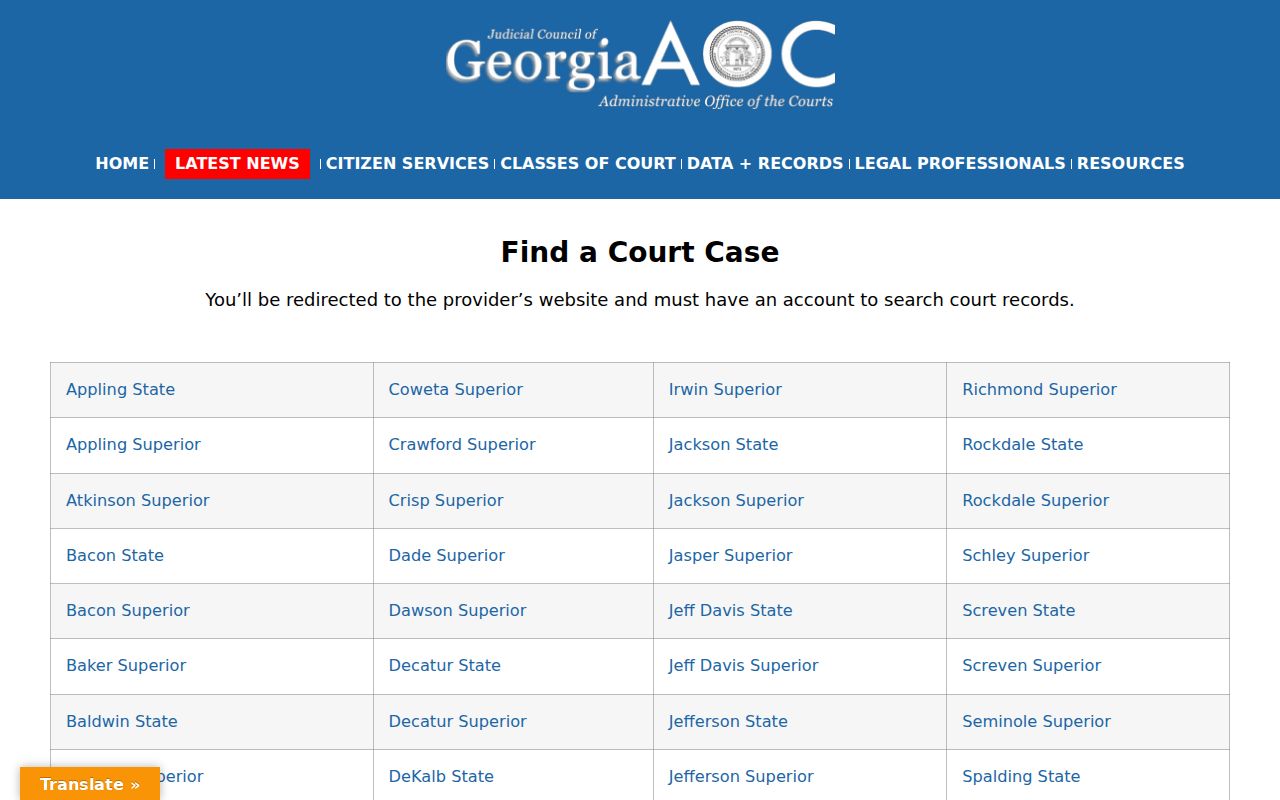
Check the named court and county before drawing a conclusion, since Georgia has no single public portal for every level or year.
At a participating county portal, compare the search inputs against the exact question:
| Search field | What to enter or compare | Georgia limit |
|---|---|---|
| Case number | Full number from a notice or prior record | Best for retrieving a known case |
| Party name | First and last name, business name, role | Common names need a second identifier |
| Court / location | County and court shown by the provider | Participation and levels vary |
| Category, date, status | Case type and a relevant filing range | Available filters depend on portal |
Georgia Court Docket Result Fields
The Fulton County Smart Search page is a representative county example, not the statewide rule.
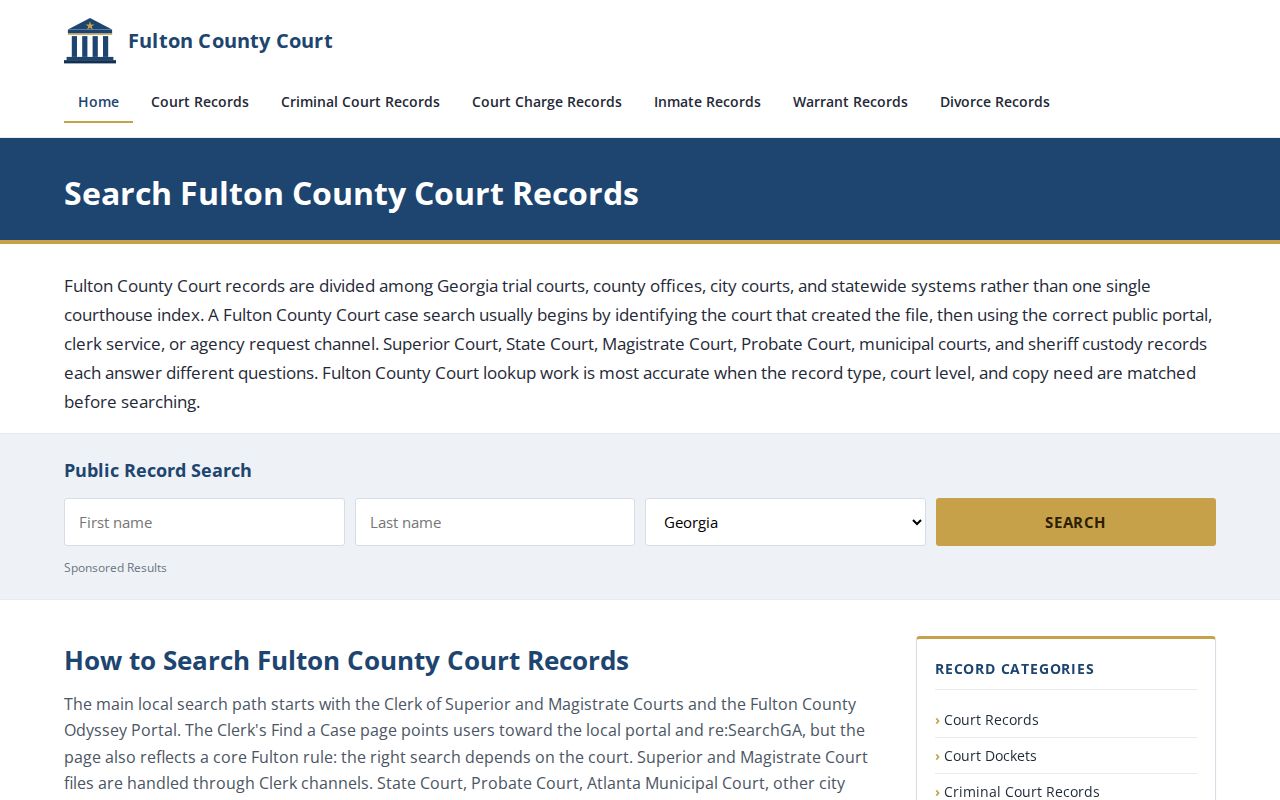
The Fulton example makes party, case and status fields visible; use the local clerk when an image or certified copy is needed.
Verify a Georgia Resident Match
A Georgia name search can return a same-name result from a different county or record family. To look up a resident for a family question, combine an exact name with a second stable detail, such as a middle name, event date, county, parcel, case number or business control number. Keep the record’s purpose in view: a court address is filed for a case, an assessor mailing field concerns tax notice, and an old directory is a dated compilation. If two records disagree, preserve both dates and ask the custodian what each field means.
For a personal identity question, use a short sequence that moves from a broad clue to a record that can be checked:
- Write down the name as given, the likely Georgia county and the question you need answered.
- Use an official record that fits the question, such as a voter self-check, county parcel card, court docket or dated directory.
- Compare one independent field, such as a middle name, date, party role or parcel, before linking two records.
- Open the source image or contact its custodian when an index label leaves the match unclear.
A sample Georgia court result may expose the following fields. Their presence varies by court and case type:
- Court location and case number, which identify where to request the file.
- Case style, parties and each party’s role.
- Category, filing date and current status.
- Docket events, hearings and disposition when shown.
- Document links, account behavior and clerk certification route.
- Docket
- A court’s ordered log of filings and events in one case.
- Index and image
- An index is a short search record; an image is a view of the filed document itself.
- Certified copy
- A copy authenticated by the court or record custodian for formal use.
Georgia Voter Records for One Person
Georgia My Voter Page is the free self-service route for a person to check registration status, polling place, sample ballot and elected officials. The form changes over time; at inspection, a search used a name and county, with any further identity detail requested by the live page. Treat the result as a registration record, not proof of physical presence at an address. Protected voters may not display as an ordinary entry.
The Secretary of State also offers ordered voter files with public columns such as name, birth year, status, registration date, residence and mailing fields, precincts and district descriptions, and voting-history dates. A file is typically delivered electronically after processing, and the order page sets fees by jurisdiction. Its July 2024 schedule listed $70 for a county file and $485 statewide; confirm current prices and timing before ordering. Full birth date, Social Security number, driver-license number and telephone are excluded. Georgia has no party registration, and “last party voted” is election history, not affiliation.
These files have a statutory voter-registration-use restriction under O.C.G.A. §21-2-601. The Secretary of State order instructions explain scope, fields and delivery; use My Voter Page for personal status questions instead of treating a bulk file as a casual resident index.
Georgia Vital Records and Eligibility
Georgia DPH keeps statewide birth and death records from 1919 forward. Access to certified copies is limited during the confidential period; an applicant may need photo identification and proof of a qualifying relationship or direct, tangible interest. Records generally become public after 100 years from birth or 75 years from death under O.C.G.A. §31-10-26. The event county and record type still matter, so a statewide index is not a promise that a copy can be sent to any requester.
The Georgia vital-record request page lists ordering routes through ROVER, GO Certificates, VitalChek, mail and eligible offices. Its listed fees include $25 for the first certified birth or death copy, $5 for each additional copy and $10 for a marriage copy. Processing can take weeks, and a faster shipping option does not always shorten record processing.
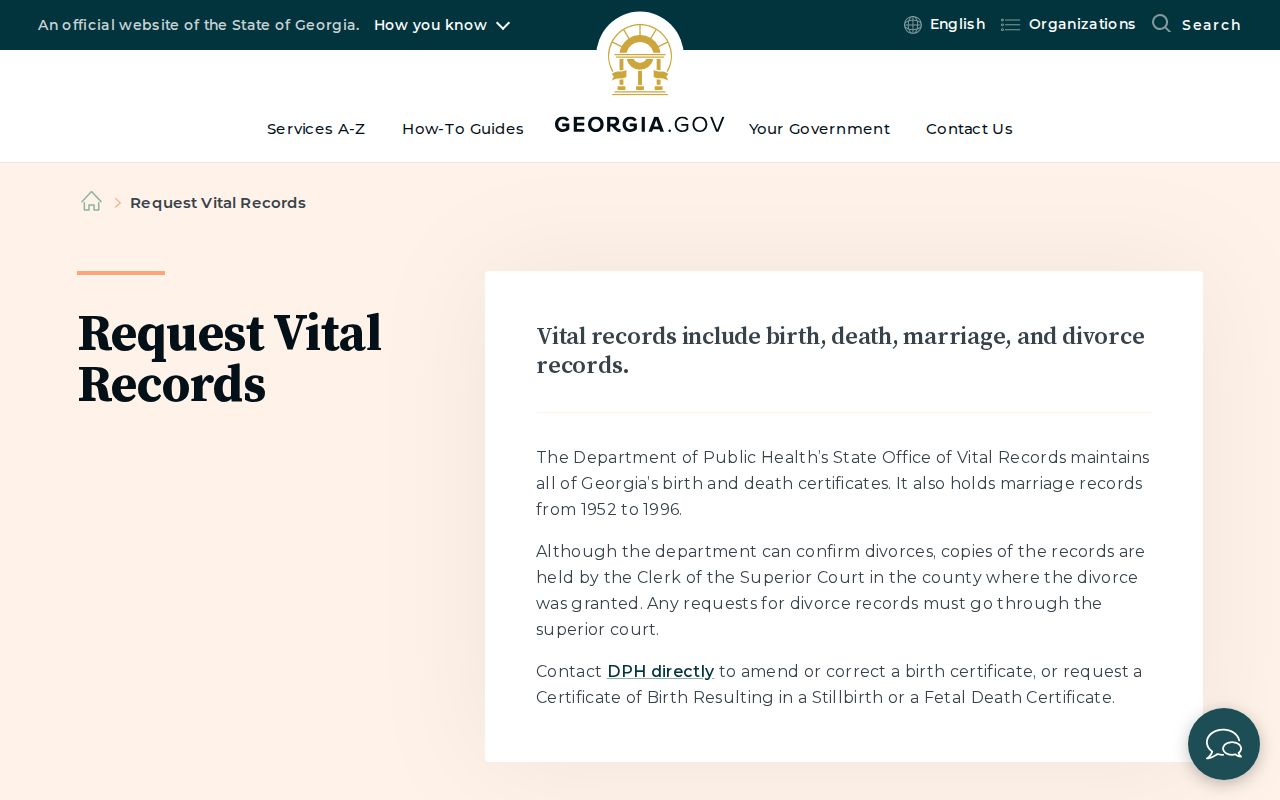
Use the current DPH instructions to confirm eligibility, supporting documents, payment and delivery before placing an order.
DPH marriage records cover June 1952 through August 1996; earlier or later marriages go to the Probate Court in the county where the event occurred. DPH can confirm divorces in that same period, but copies come from the Superior Court clerk that granted the divorce. Georgia Archives has statewide marriage and divorce indexes for selected periods, while county survival varies after courthouse disasters. The application for a marriage record is more restricted than the record itself.
Separate Georgia Custody and Registry Results
The Georgia Department of Corrections search accepts a name, description, GDC ID or case number. It covers state custody information, not every county jail, federal facility or historical event. Georgia does not have one uniform statewide county-jail roster; identify the county sheriff and use that office’s official route when local custody is the question. A custody-notification service is separate from a resident index.
The official GDC page shows the available search keys and a reminder to verify a result with the department.
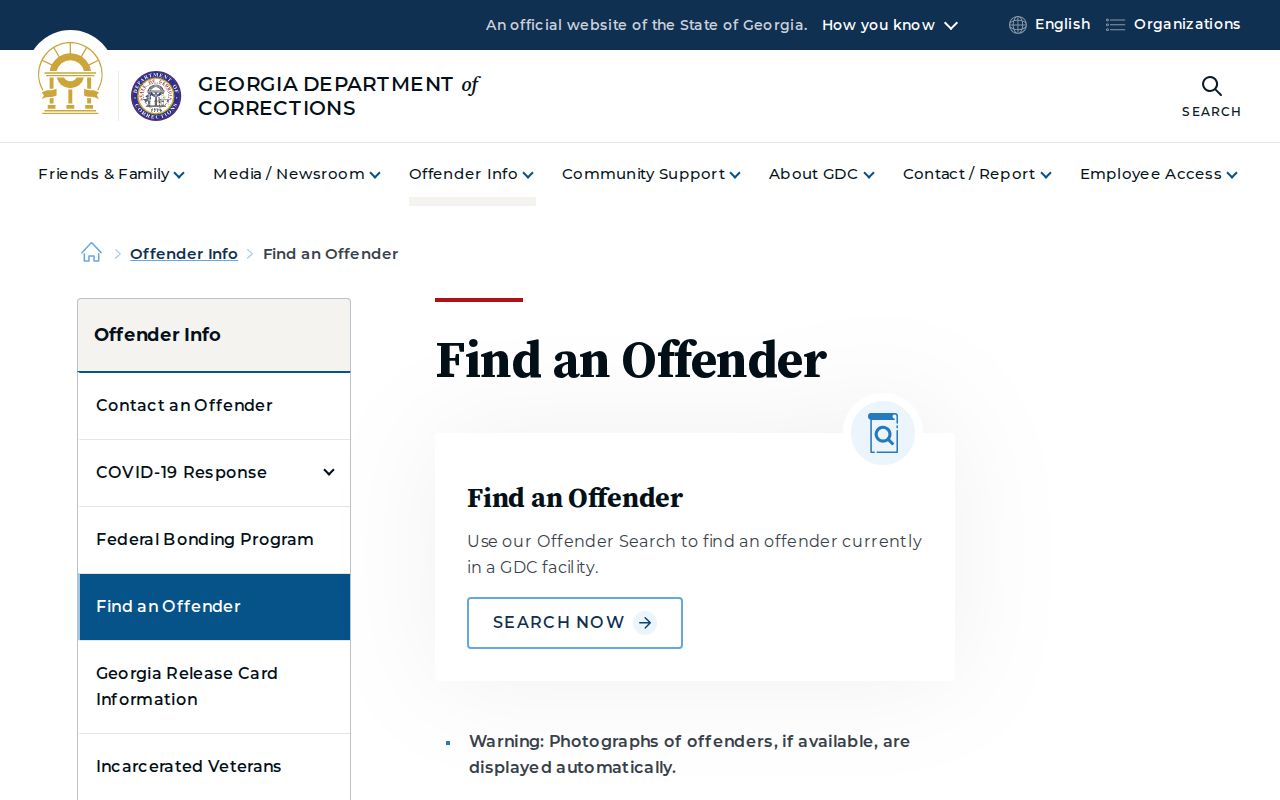
Keep a state-custody result separate from a county jail search or a court case, since each system has a different scope.
Georgia GBI Resident Registry Search
The GBI Sex Offender Registry is a distinct statutory public-safety system under O.C.G.A. §42-1-12. Its public fields can include a person’s name, physical description, address, conviction and registration dates, county, verification information and photograph; administrative identifiers remain excluded. Sheriffs update residence information and the data can change daily. A registry entry should be reported with its date and stated status, without inferring a broader criminal record or current physical presence.
The GBI registry page describes its public search and download route, along with fields withheld from public view.
Use the registry for its defined public-safety purpose, and do not treat it as a substitute for a court file.
Audit a Missing Georgia Resident Record
A blank result does not show that a record never existed. In Georgia, the search may be older than an online index, tied to a different event county, filed under an estate or entity, held only at a courthouse terminal, or hidden by a protection rule. A name can also be damaged by OCR or indexed with a spelling variant. Record the portal, county, search terms, date and known coverage before moving to another source.
Before closing your Georgia search, check the likely reasons for a gap:
- Does the event predate the portal’s stated years or the statewide deed-index horizon?
- Could the record belong to a spouse, trust, estate, business or neighboring county?
- Is the image available only through a clerk terminal, library, microfilm or archive?
- Could an address be protected, a case sealed, or a dynamic form require an account?
- Does a courthouse disaster affect that record series, rather than the whole county?
If the record is held by a Georgia agency but lacks a routine index, send a narrow request under the Georgia Open Records Act, O.C.G.A. §§50-18-70 et seq. Ask for existing material by parcel, instrument, case or date. A custodian generally responds within three business days with records, timing, estimated cost or an exemption explanation, but need not create a new report. Georgia Archives continues digitizing collections, so recheck its Vault and finding aids after a meaningful update. Mark a negative result with its search date.
Different personal questions need different custodians. A Georgia heir search can use a probate file that names testators, heirs, witnesses or property. A birth-parent question belongs in the state’s confidential adoption and records process, not public digging. Yearbooks and alumni collections can help reconnect with a classmate, while obituary and cemetery indexes may close a family trail. Georgia Archives research and the Digital Library of Georgia offer historical material; local library special collections can add newspapers, vertical files and school records.
Legal Limits on a Georgia Resident Lookup
Georgia’s open-records law makes many government records available, but it does not erase other privacy rules. Vital records have eligibility limits; juvenile, adoption, sealed and protected family matters may be closed; and voter files exclude specified personal fields. VoteSafe and Safe at Home can conceal or substitute qualifying residents’ addresses. Never try to work around those protections by combining a voter result with a tax, court or neighboring record.
A personal record search should stay tied to a lawful question. If an entry is wrong, incomplete or tied to the wrong person, contact the custodian using the official route and include the record number and date. Do not scrape records, share account credentials, expose sensitive identifiers or use repeated searches to frighten someone. Georgia law addresses stalking in O.C.G.A. §§16-5-90 and 16-5-91; use records to understand a source, not to watch or pressure a person.
Lawful use. Keep a Georgia resident lookup to legitimate personal research and use the least information needed. Stalking, harassment and efforts to expose a protected person can cause real harm and may violate Georgia law.